Beating Broke

Personal Finance from the Broke Perspective

  • Home
  • About
  • We Recommend
  • Contact
  • Privacy Policy

Powered by Genesis

Are Your Spending Habits Quietly Making You a Target for Financial Scams?

July 22, 2025 By Teri Monroe Leave a Comment

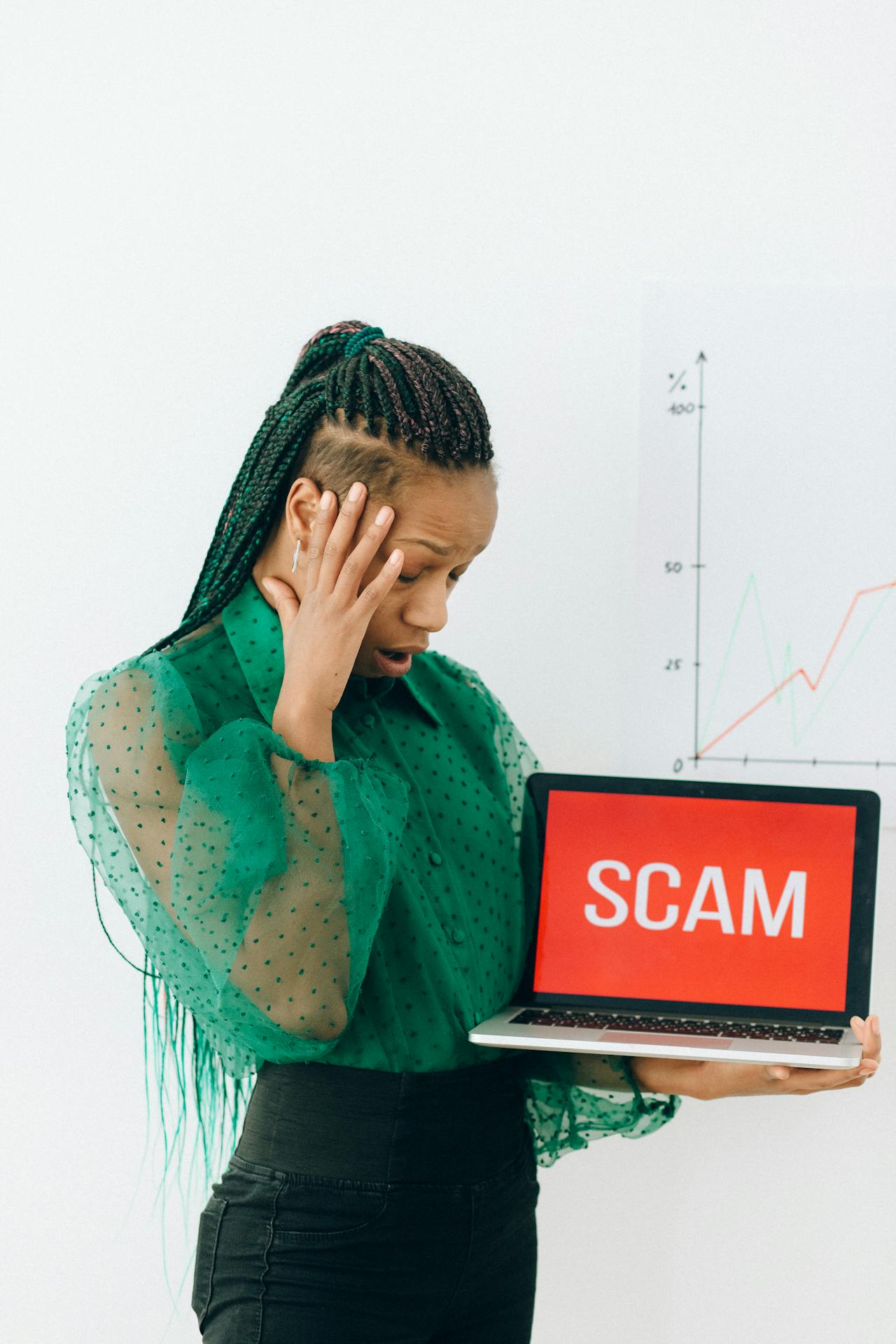
spending habits that make you prone to financial scams
Image Source: Pexels

Most people assume financial scams happen because someone lets their guard down for a moment. But in reality, scammers are often watching long before they strike. They look for patterns in how you spend, shop, and share information. Without realizing it, your everyday spending habits could be making you an ideal target. Here are spending habits you need to modify to protect yourself.

1. Oversharing Purchases on Social Media

Do you find yourself sharing everything on social media? That luxury bag, brand-new car, or vacation photo may seem like harmless posts. But to scammers, it’s a flashing neon sign. Public posts that show off wealth can attract financial scams, like phishing attempts, fake investment offers, and even identity theft.

2. Frequent Use of Public Wi-Fi for Transactions

Public Wi-Fi isn’t safe if it isn’t encrypted. Shopping or banking over unsecured public Wi-Fi can expose your login credentials and card details. Hackers often target people who make online purchases in coffee shops, airports, or hotels. To be safe, wait to make that purchase at home with a secure Wi-Fi network.

3. Falling for “Too Good to Be True” Deals

Flashy discounts or exclusive online offers can lure deal-seekers into fake websites or phishing traps. If you’re frequently drawn to bargain-hunting or fast-checkout links, you may be more likely to click on a scam. Only make purchases from reputable sites. If you get redirected to an unfamiliar site, exit it immediately.

4. Using the Same Password for Shopping Sites

Many people reuse one or two passwords for convenience. If one shopping account is compromised, scammers can quickly access your financial data elsewhere. Always use complex passwords and use 2-factor or 3-factor authentication when possible. Never write down passwords on your computer or in an email, in case you get hacked.

5. Ignoring Small, Unfamiliar Charges

Scammers often “test” a stolen card with tiny charges before making big purchases. If you’re not reviewing your statements closely, you may miss the warning signs. Another option is to sign up for monitoring services to catch suspicious activity. That way, you will catch fraudulent activity before it causes irreparable damage.

6. Subscribing to Sketchy Email Lists

Entering your email on unverified shopping or giveaway sites can lead to a flood of spam and financial scams. Once your info is sold, you’re more likely to get targeted by sophisticated phishing attempts. Make sure that you sign up for monitoring services that scan the dark web for your email. If your information has been sold to thieves, you’ll know.

7. Using Buy Now, Pay Later Without Monitoring

These services can encourage overspending and make it harder to track what you owe. Scammers may also spoof BNPL notifications to trick you into clicking malicious links. Plus, BNPL software often uses soft user-friendly identity checks that are ideal for fraudsters. In fact, BNPL services are increasingly becoming a popular target for fraud, leading to billions of dollars in fraud losses.

Protect Yourself with Smarter Spending

Staying safe doesn’t mean you have to stop enjoying your money. It just means being aware. Keep purchases private, use strong and unique passwords, and always verify who you’re giving your financial information to. The more mindful you are, the harder you make it for scammers to target you.

Read More

10 Things You Should Never Buy New—We Did the Math

6 Debt Traps That Seem Harmless—Until They Jeopardize Your Entire Identity

Teri Monroe Headshot
Teri Monroe

Teri Monroe started her career in communications working for local government and nonprofits. Today, she is a freelance finance and lifestyle writer and small business owner. In her spare time, she loves golfing with her husband, taking her dog Milo on long walks, and playing pickleball with friends.

Filed Under: General Finance Tagged With: financial scams, fraud, hackers, spending habits

Top 5 Tips for Staying Safe at the ATM

March 21, 2011 By Shane Ede 7 Comments

We spend a lot of time talking about how to insure that our money is safely in a FDIC or NCUA insured bank or credit union.  We talk about finding the best ways to squeeze those last few pennies of interest out of our savings accounts and reduce the interest on our loans.  But, one thing we often overlook is our physical safety when it comes to money.

24hr ATMFirst, and foremost, I would like to inform you that having a swimming pool of gold coins ala McDuck is a really cool idea, but is somewhat hazardous to your health if you plan on diving into and swimming through said coins.  For those of us that can’t fill a pool full of coins (even pennies), the largest place that we need to ensure our physical and fiscal safety is while using an ATM.  Here are 5 tips to help you use the ATM as safely as possible, and protect yourself from ID theft (and physical harm).

  1. Choose a well lit ATM. Just because that ATM that’s hidden away in a dark alley is one of your in-network free ATMs, doesn’t mean you should put yourself at risk to use it.  Always choose an ATM in a well lit area.  The usage fee is worth your safety.
  2. Check for skimmers. The #1 most popular way of harming you at an ATM is the use of a skimmer.  A skimmer is a small device made to look exactly like the card reader that fits over the card reader.  As you insert your card into the reader to use the ATM, the skimmer reads the data on the card and stores it for the crooks to retrieve at a later date.  Some estimates say that these crooks have spent $250,000 on one of these devices, so they are very hard to spot.  Take a close look at the reader before you use it.  If you have any suspicions at all, report them to the staff at the institution that runs the ATM and then look for a new ATM to use temporarily.
  3. Check for cameras. Again, the crooks like to see what you’re doing when you enter your PIN.  So, they install tiny pinhole cameras that record you as you enter in your PIN and other information.  Also check for security cameras.  There’s usually one in the ATM housing itself, but having one or two in the vicinity is also a good sign.  Popular places for crooks to place pinhole cameras include the skimmer that they install, behind mirror housings, and as external stickies right out in the open.  Whatever it takes for them to be able to try and capture your PIN.  Which brings us to the next tip.
  4. Cover your PIN. When you go to enter your PIN, use your other hand or anything on hand (purse, hat, etc) to cover the PIN pad and your hand as you enter your PIN.  This little bit of caution can save you a lot of headache.
  5. Watch your back. One of the other popular ways for crooks to get your PIN is to do what is called “shoulder surf”.  Basically, as you walk up to the ATM, one of the crooks will walk up behind you and merely watch over your shoulder as you enter in you PIN.  If they can get the card, and the PIN, they can basically write their own checks from your account.  A quick glance over your shoulder or into the mirror on the ATM is usually enough to ensure someone isn’t taking a peek at your PIN

ATMs have become such a common thing in many of our everyday lives that we give very little thought to our own security while using them.  More often than not, ATMs are just as safe as going in to a branch and talking with a teller, and banks and credit unions do their best to make them ATMs as safe as possible.  Despite all of that, credit card fraud is a $1+ Billion dollar industry. Observing these 5 tips will help you avoid the risks that can sometimes occur and help you conduct your banking safely.

photo credit: ⓆiaoⒹaⓎe錫濛譙大爺

Shane Ede

Shane Ede is a business teacher and personal finance blogger.  He holds dual Bachelors degrees in education and computer sciences, as well as a Masters Degree in educational technology.  Shane is passionate about personal finance, literacy and helping others master their money.  When he isn’t enjoying live music, Shane likes spending time with family, barbeque and meteorology.

www.beatingbroke.com

Filed Under: credit cards, General Finance, ShareMe Tagged With: ATM, credit card fraud, credit cards, fraud, safety

  • Facebook
  • Pinterest
  • RSS
  • Twitter

Improve Your Credit Score

Money Blogs

  • Celebrating Financial Freedom
  • Christian PF
  • Dual Income No Kids
  • Financial Panther
  • Gajizmo.com
  • Lazy Man and Money
  • Make Money Your Way
  • Money Talks News
  • My Personal Finance Journey
  • Personal Profitability
  • PF Blogs
  • Reach Financial Independence
  • So Over Debt
  • The Savvy Scot
  • Yes, I am Cheap

Categories

Disclaimer

Please note that Beating Broke has financial relationships with some of the merchants mentioned here. Beating Broke may be compensated if consumers choose to utilize the links located throughout the content on this site and generate sales for the said merchant.

Visit Our Advertisers

Need to change careers? Consider an Accounting Certificate Program from WTI.