Beating Broke

Personal Finance from the Broke Perspective

  • Home
  • About
  • We Recommend
  • Contact
  • Privacy Policy

Powered by Genesis

Dollar Cost Averaging; Not Just For Stocks

October 31, 2012 By Shane Ede 13 Comments

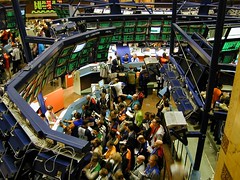
Most of the time, when you hear or read the phrase “Dollar Cost Averaging”, it’s being applied to the stock market.  It’s the practice of buying a set amount of stock at a regular interval whereby the average cost per share of stock ends up normalizing.  So, if you buy stock high one time, and low the next, and then high, your average cost is going to be lower than the high cost and more than the low cost.  So long as the stock doesn’t pull an Enron, and slowly increases in value, you come out ahead in the long term.

But, does it have to apply to just stocks?  Absolutely not.  It really can apply to anything that you buy on a regular basis.  Gas for example.  A couple of weeks ago, I filled up the car at about $3.89 a gallon.  Today, as I drove by the gas station, it was at $3.69 a gallon.  I filled up at $3.89, so I don’t really need any gas right now, but I seriously considered stopping and topping off the tank to bring the overall cost of the gas I bought over the last several weeks down a few pennies.

There might be some argument that dollar cost averaging doesn’t work very well for consumables.  After all, if I had bought a few gallons at $3.69, my overall reserves of gas would not increase.  I’ve already consumed those few gallons that I paid $3.89 a gallon for.  But, I would have increased the total amount I had bought, and the average price would have been less than $3.89.

Dollar cost averaging works especially well for things that regularly fluctuate in price.  If you’re building a stockpile of food in your basement, it’s chili bean season.  There’s sales all over the place for chili beans.  Now, you could buy 50 or so cans at the sale price, but you might be tight on storage space.  Or, they might expire before you get to use them all.  Instead, you can use dollar cost averaging to buy slightly more than you might normally buy, and bring down the average cost of the ones you have to buy later in the season when they aren’t on sale any more.

O.K.  This does seem a little silly.  After all, who’s going to go out and figure out the average cost of a can of chili beans in the basement?  But, there’s a point in there.  There’s a certain rationality in buying things in set increments over time rather than trying to time the market (or chili bean sale) and buying a whole lot of the item at once.  How many times have you bought something only to find that it was on sale the next week?

And, don’t forget that the same principle goes the other way.  There are many normal things that we do on an everyday basis that can apply to the stock market too!  When we shop, we tend to stick to the brand names we know.  Even if those brand names are generic names.  Go far enough out of town and stop at a grocery store and try and convince yourself that the generic brand at that store is the same as the generic at home.  It takes a bit of thought!  Sticking to companies (brands) that you know when investing can be beneficial too.  More often than not, those brands and companies are companies that have been around for a long time and built a certain amount of trust in the marketplace.  They’re unlikely to just be an overnight sensation, or to quickly fall from favor.  In short, they’re stalwart investing options.

What other everyday habits do we all have that can be carried over to the stock market?  And what other stock market habits do we have that can carry over to everyday life?

img credit:Nick Harris1, on Flickr

Shane Ede

Shane Ede is a business teacher and personal finance blogger.  He holds dual Bachelors degrees in education and computer sciences, as well as a Masters Degree in educational technology.  Shane is passionate about personal finance, literacy and helping others master their money.  When he isn’t enjoying live music, Shane likes spending time with family, barbeque and meteorology.
www.beatingbroke.com

Filed Under: Financial Miscellaneous, Frugality, Investing, Saving, ShareMe Tagged With: dollar-cost averaging, Frugality, Investing, Saving

Motif Investing

August 24, 2012 By Shane Ede 5 Comments

How much do you know about investing?  If you needed to build a balanced, diversified portfolio of investments, would you even know where to begin?  What if you wanted to take advantage of a certain trend by investing in the companies behind that trend?  Could you do the research necessary to find those companies and pick the ones that are best suited to taking advantage of the trend?  Yeah, me either.

Motif Investing; Investing in Patterns

That’s where Motif Investing (affiliate link) comes in.  They’ve done the research for us.  They know how to build a portfolio of investments that is poised to take advantage of a new trend.  And, they’re sharing that knowledge.  They’ve created motifs that you can invest in.  In their own words: “A motif is a carefully researched and balanced grouping of up to 30 stocks that combine to give investors diverse exposure to a single big idea.”  But, what does that mean?  Well, let’s say you think the economy is going to continue to stink for the next several years.  You know that as the economy goes down, places where you can buy stuff cheaply do well.  How about a motif called “Discount Nation” that is an array of discount retail stocks?  What if you also think that when the economy goes down, things like gambling, alcohol, and tobacco pick up, and the companies that produce those things do well too?  The “Seven Deadly Sins” motif might be for you.  Check out the description they’ve given it.

Even in tough times, consumers continue to partake in things that may not be considered particularly virtuous. From cigarettes to sex, burgers to Botox®—consumer indulgences require products and services from a wide range of publicly traded companies. Some luxuries see reduced demand during tough times. But smokers could keep smoking, drinkers keep drinking, and the lustful keep…lusting. Bad habits are hard to break. And when times are rough, who wants to even try? Nobody can predict the markets, but consumers are only human. And economic conditions may not be able to defeat their appetites for sinful stuff.

Funny! You’ve got to have an account, and be logged in to see the individual stocks for each motif.  I couldn’t resist, so I signed up just to see what was in the “Seven Deadly Sins” motif.  It’s got 25 stocks in it.  I recognize almost all of the names, like Anheuser-Busch under the Gluttony category, and Sturm Ruger & Co. under the Wrath category.

Investing with Motif Investing

Motif investing might be something to look into.  It looks like they’ve got a pretty low minimum investment of $250 per motif with a fee of only $9.95 for the entire motif.  If you tried to replicate the above motif, you’d have to buy 25 individual stocks, and even at the $4.95 I’ve seen at a few discount investing houses, you’re going to spend a ton more to achieve the same diversification.  In a way, it’s a bit like an ETF or mutual fund, but without the added expenses of either.  Plus, unlike an ETF or mutual fund, you own the shares of the individual stocks, not the shares of the ETF or mutual fund.

The motifs are also customizable.  You can adjust the weighting of the motif to lean a little more heavily on one stock or another, and can even add or remove stocks to the motif to fully customize it to your liking.  Each gives you a simple way to buy a little diversification as is, or you can customize it to fit your liking.  I like that.

I don’t necessarily like that there is a minimum investment, but I’m sure it’s in place to keep their costs as low as they can. They also don’t reinvest dividends, which would be nice to see since they’re already doing fractional shares, but, I do like the fee structure.  $9.95 might seem a bit much, but when you consider that you’re buying up to 30 stocks at a time, it’s really a pretty good deal.  Plus, once you own a motif, you can sell/buy individual stocks within the motif for $4.95 a trade.  They’ve got IRA accounts available which is nice.

If investing seems like a big confusing mess to you, you might want to check out Motif Investing.  I like the idea, and having some knowledge behind the stock picking is always a good thing.  I’m not sure that too many seasoned investors will be picking up the idea, simply because most of them know how to do their research, and usually have a set way they go about investing.  Maybe I’m wrong, but that’s the way I see it.  It’s a cool tool for beginners.


Shane Ede

Shane Ede is a business teacher and personal finance blogger.  He holds dual Bachelors degrees in education and computer sciences, as well as a Masters Degree in educational technology.  Shane is passionate about personal finance, literacy and helping others master their money.  When he isn’t enjoying live music, Shane likes spending time with family, barbeque and meteorology.

www.beatingbroke.com

Filed Under: Investing Tagged With: Investing, motif investing

Spread Betting: How Does it Work?

March 12, 2012 By Shane Ede 5 Comments

I’ll be the first to admit, here and elsewhere, that I’m not an investing savvy person.  I know just enough to get myself into trouble.  One of the new terms that I’ve learned just recently is Spread Betting.  Now, most anything that I’ve ever dealt with that involved the words spread and betting involved bookies, Super Bowls, and point spreads of more than a field goal.  So, when I heard the term used in a financial sense, I had to go and do a little research to see what it was all about.  And, like anything else, financially, that I research, I had to share it with you, the readers!

What is Spread Betting?

DSCN1753Spread betting, in a financial sense, is betting on the markets based on how you feel they will perform.  If you think the markets will go up, you bet on them going up (go long).  If you believe they will go down, you bet on them going down (go short).  The betting itself is pretty simple.  You simply place your bet (going up or down), and then wait to see where the markets go.  After you’ve placed your bet, you can close it to claim your winnings.

How to Spread Bet.

This can probably be best described by example.  Let’s assume that we’re going to make a bet on an index.  It can be the NASDAQ, S&P, or whatever.  We feel that it’s going to go up based on recent news.  So, we decide to go long, and bet on the index to rise.  We place a long bet.  If the stock rises, so does our profit.  The profit (or loss) is based on the spread.  If the index starts at 100 (an example), and we go long, and it rises to 200, the spread would be 100.  If we close the bet at 200, our bet is multiplied by the spread.  If we had bet $1, we would have made $100.

Risks of Spread Betting.

As you can probably imagine, anything with the term betting in it’s name has a risky side to it.  Much like our bet would be multiplied by the spread in the winning scenario above, so too would they be multiplied by the spread if we’re wrong.  If we had been wrong, and the index had dropped by 100 points, we would have lost $100.  To some degree, this can be mediated by using a stop order that will automatically close the bet should it drop (or rise, if we bet on a drop) past a certain point.  While a stop order can minimize your loss, it doesn’t remove the risk entirely.  There’s still potential for some pretty damaging losses should you be wrong often.

Is Spread Betting for you?

I’m not financial adviser, but if I were, I’d say that spread betting is something better left to those who know what they are doing.  I’m not one of those people, and until you are, you probably should avoid it.  On the other hand, if you’re a seasoned trader of the financial stock markets, and feel like you’ve got a good feel for what they are going to do on any given day, maybe it’s something you’ll want to try.  I can’t say either way.  What I can say, is that with anything that’s related to your finances, there’s no excuse for not knowing.  If you don’t know what you’re getting into, you shouldn’t get into it.  Do your research, learn the tactics and methods, and then give it a try.

photo credit: Perpetualtourist2000

Shane Ede

Shane Ede is a business teacher and personal finance blogger.  He holds dual Bachelors degrees in education and computer sciences, as well as a Masters Degree in educational technology.  Shane is passionate about personal finance, literacy and helping others master their money.  When he isn’t enjoying live music, Shane likes spending time with family, barbeque and meteorology.

www.beatingbroke.com

Filed Under: Investing Tagged With: Investing, spread betting, spread betting forex, spread investing

  • « Previous Page
  • 1
  • …
  • 6
  • 7
  • 8
  • 9
  • 10
  • 11
  • Next Page »
  • Facebook
  • Pinterest
  • RSS
  • Twitter

Improve Your Credit Score

Money Blogs

  • Celebrating Financial Freedom
  • Christian PF
  • Dual Income No Kids
  • Financial Panther
  • Gajizmo.com
  • Lazy Man and Money
  • Make Money Your Way
  • Money Talks News
  • My Personal Finance Journey
  • Personal Profitability
  • PF Blogs
  • Reach Financial Independence
  • So Over Debt
  • The Savvy Scot
  • Yes, I am Cheap

Categories

Disclaimer

Please note that Beating Broke has financial relationships with some of the merchants mentioned here. Beating Broke may be compensated if consumers choose to utilize the links located throughout the content on this site and generate sales for the said merchant.

Visit Our Advertisers

Need to change careers? Consider an Accounting Certificate Program from WTI.