Beating Broke

Personal Finance from the Broke Perspective

  • Home
  • About
  • We Recommend
  • Contact
  • Privacy Policy

Powered by Genesis

In Today’s Financial Environment Am I Still Wasting Money on Rent?

June 7, 2024 By Catherine Reed Leave a Comment

In Today's Financial Environment Am I Still Wasting Money on Rent

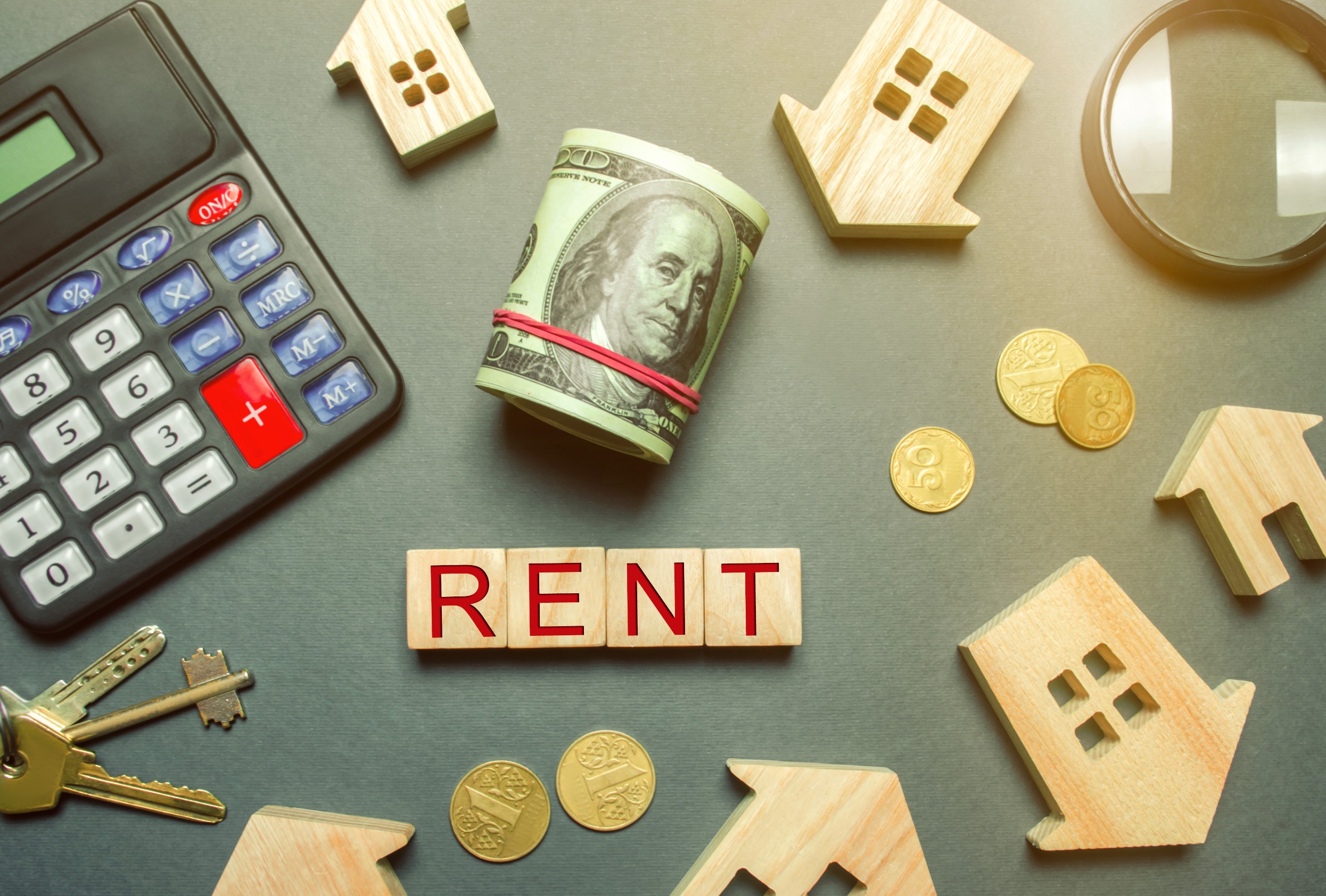
With the ever-changing financial landscape, many people question whether renting is a prudent choice or a waste of money. Rising property prices, fluctuating interest rates, and economic uncertainties make this a timely and relevant topic. Understanding the nuances of renting versus buying is crucial for making informed financial decisions. Here, we explore whether you are genuinely wasting money on rent in today’s economic environment.

The Flexibility of Renting

The Flexibility of Renting

Renting offers flexibility that homeownership often cannot match. For those with transient jobs or uncertain future plans, renting provides the freedom to relocate without the long-term commitment of a mortgage. Additionally, renters can often move to different neighborhoods or cities with relative ease. This flexibility is invaluable for those who value mobility and adaptability.

Upfront Costs and Financial Barriers

Upfront Costs and Financial Barriers

One of the significant advantages of renting is the lower upfront cost. Purchasing a home typically requires a significant down payment, with the preferred target being 20 percent. Plus, there are closing costs and other fees that can be a financial barrier for many. Renting, on the other hand, usually involves a security deposit and the first month’s rent, making it more accessible. These lower initial costs can free up money for other investments or savings goals.

Maintenance and Repair Responsibilities

Maintenance and Repair Responsibilities

Renters generally aren’t responsible for maintenance and repairs, which can save a considerable amount of money and hassle. Homeowners must budget for unexpected expenses like plumbing issues, roof repairs, and appliance replacements. These costs can add up quickly and strain financial resources. By renting, individuals can avoid these unpredictable expenses and the stress that comes with them.

Opportunity Costs of Renting

Opportunity Costs of Renting

While renting offers several financial advantages, it also comes with opportunity costs. Rent payments do not build equity, meaning the money spent on rent does not contribute to ownership or asset accumulation. Over the long term, this can result in a significant financial disadvantage compared to owning a home. Evaluating these opportunity costs is essential for understanding the true financial impact of renting.

Housing Market Volatility

Housing Market Volatility

The housing market’s volatility plays a crucial role in the rent versus buy decision. In times of economic uncertainty, property values can fluctuate dramatically, impacting the potential return on investment for homeowners. Renting can be a safer option during such periods, as it avoids the risk of property devaluation. Understanding the current housing market trends can help determine whether renting is a better choice financially.

Financial Stability and Job Security

Financial Stability and Job Security

Renting can be advantageous for those with unstable income or job security. Without the burden of a mortgage, renters may find it easier to adjust their living expenses to match their financial situation. This can provide a safety net during times of economic hardship or career transitions. Ensuring financial stability and adaptability is crucial in today’s unpredictable economic environment.

Real Estate Investment Alternatives

Real Estate Investment Alternatives

For those questioning whether they are wasting money on rent, exploring real estate investment alternatives can be beneficial. Investing in real estate through REITs (Real Estate Investment Trusts) or other property investment vehicles allows individuals to gain exposure to the real estate market without purchasing a home. These investments can provide income and potential capital gains while maintaining the flexibility of renting.

Comparing Rent and Mortgage Payments

Comparing Rent and Mortgage Payments

Comparing monthly rent payments to potential mortgage payments is essential for making an informed decision. In some markets, mortgage payments may be comparable to or even lower than rent payments, making homeownership a financially viable option. However, this comparison should also consider property taxes, insurance, and maintenance costs. A thorough analysis helps determine the most cost-effective living arrangement.

Long-Term Financial Goals

Long-Term Financial Goals

Aligning your housing choice with your long-term financial goals is crucial. If building wealth and financial security are priorities, owning a home can be a strategic move, provided it aligns with your budget and lifestyle. Conversely, if flexibility, lower upfront costs, and avoiding maintenance responsibilities are more critical, renting may be the better choice. Balancing these factors helps achieve a stable and fulfilling financial future.

Economic Trends and Rent Prices

Economic Trends and Rent Prices

Current economic trends and rent prices significantly impact the decision to rent or buy. In some areas, rent prices have surged, making homeownership more attractive. Understanding local rent trends and comparing them to housing market conditions can provide valuable insights. Staying informed about economic developments ensures that your housing decision remains financially sound.

You’re Not Necessarily Wasting Money on Rent

You’re Not Necessarily Wasting Money on Rent

Renting offers flexibility, lower upfront costs, and extra freedom – particularly when it comes to maintenance responsibilities and the ability to move more spontaneously – making it an attractive option for many. However, the opportunity costs of not building equity and the potential advantages of homeownership cannot be ignored. By carefully considering personal financial stability, market conditions, and long-term goals, you can determine whether renting is the right choice in today’s financial environment. Making a thoughtful decision ensures that you are not wasting money on rent but rather making a strategic financial choice that aligns with your lifestyle and future aspirations.

Read More:

Millennials Will Be Living with Their Parents Forever: 12 Ways to Get Out

How to Prepare for Major Expenses Associated with Your Home

Catherine Reed
Catherine Reed

Catherine is a tech-savvy writer who has focused on the personal finance space for more than eight years. She has a Bachelor’s in Information Technology and enjoys showcasing how tech can simplify everyday personal finance tasks like budgeting, spending tracking, and planning for the future. Additionally, she’s explored the ins and outs of the world of side hustles and loves to share what she’s learned along the way. When she’s not working, you can find her relaxing at home in the Pacific Northwest with her two cats or enjoying a cup of coffee at her neighborhood cafe.

Filed Under: housing Tagged With: buying a home, homeownership, housing costs, mortgage, real estate, rent, wasting money on rent

3 Lessons I Learned When Looking for a New House

July 18, 2022 By MelissaB Leave a Comment

Lessons I Learned Looking for a New House

This is a crazy market in which to buy a house. While I knew that from watching the news, recently we got to experience the market firsthand because we’re moving from Arizona to New York. The plus side is that our house in Arizona sold within three days of listing. The bad news is that we had to visit many properties in New York and put in offers on three different houses before we finally got one. Along the way, there were many lessons I learned while looking for a new home. These were the most important ones.

Beware of Low Prices

We started our search by looking at houses at the lower end of our price range. We have one child starting college this year, and two more in the next five years, so keeping housing costs low made sense. However, we quickly veered away from those houses for two reasons:

House Problems

Most houses in the lower end of our price range had problems. Two of them stunk. One smelled throughout the house, and the other smelled fine until we opened the basement door. Then we were confronted by an awful odor we couldn’t place. Others were outdated or had a strange layout such as having to walk through one bedroom to get to another one.

Neighborhood Problems

If the houses in the lower price range didn’t have problems externally, the neighborhood did. We saw one meticulously kept and updated property. However, it was the nicest house in the neighborhood, which means it might be more difficult for us to sell later. Plus, the neighbors were gathered outside and started talking about us as we walked into the house. Not the type of neighborhood in which we wanted to move.

Beware the Unkempt Exterior

Lessons I Learned While Looking for a House

I was amazed how many homeowners didn’t attempt to create curb appeal. We walked up to homes with dirty siding, peeling paint on the window frames, and a rotted piece of wood with a hole on the steps to the home, just to name a few problems.

Unfortunately, many of the backyards weren’t much better. One had a tiny mowed section, but the rest of the small yard contained weeds and overgrown grass.

If you want people to buy your home, try to make the yard and exterior of the home inviting! Not surprisingly, most properties with unkempt exteriors were also not in good shape inside.

Final Thoughts

Finding a home to purchase is a challenge no matter when you’re looking. However, in this current seller’s market, there are important lessons I learned when looking for a new house. Hopefully, we won’t need to buy another house anytime soon, but if we do, I know what to look for and when to walk away, sometimes before even seeing the inside of an unkempt house.

Read More

Declutter Your House Like You’re Moving and Make Some Cash

Making an Offer on a House

Shopping for a New House


MelissaB
MelissaB

Melissa is a writer and virtual assistant. She earned her Master’s from Southern Illinois University, and her Bachelor’s in English from the University of Michigan. When she’s not working, you can find her homeschooling her kids, reading a good book, or cooking. She resides in New York, where she loves the natural beauty of the area.

www.momsplans.com/

Filed Under: General Finance, Home Tagged With: buy a home, buying a house, property, real estate, relocation

What Is Required for a Hard Money Loan?

June 29, 2020 By MelissaB Leave a Comment

When most people buy a house, they take out a loan with a traditional lender.  However, individuals who are interested in buying run down houses to fix them up to then sell or rent rarely qualify for traditional mortgages.  Instead, they seek hard money loans, which have short terms and give the investor more flexibility than a traditional loan.  Before you first enter the home flipping business, it’s important to know what is required for a hard money loan.

What Is Required for a Hard Money Loan?

What Is Required for a Hard Money Loan?

Of course, each lender will have their own requirements, but in general, there are three criteria that are most important when trying to secure this type of loan.  Not surprisingly, many of the requirements circle around cash on hand and experience.

Down Payment

Most banks require a 25 to 30% down payment for residential properties.

In general, a successful hard money loan fit this formula.  Consider the estimated after repairs retail value of the property.  Let say you expect to sell the property for $250,000 when you’re done fixing it up.  Maybe you purchased the property for $100,000.  You expect to complete the repairs for $60,000, and you also want to borrow enough to cover closing costs of, say, $15,000.  Your total comes to $175,000, or 70% of the expected value of the property.  If you use this formula, you will likely qualify for a hard money loan.

Cash Available

What Is Required for a Hard Money Loan?
Photo by Shane on Unsplash

Since hard money loans are inherently risky, the lender will take a close look at your cash reserves.  You will need substantial cash reserves to use during the renovation process to pay for things like HOA dues, interest payments on the hard money loan, insurance on the property, and other expenses.

The more cash you have available, the more likely you are to qualify for the loan.

Exit Strategy

The last thing the bank will consider is your exit strategy.  Most hard money loans only have terms of six to 18 months, so you must have a plan for what to do when the loan term ends.

For private properties, there are two basic exit strategies:

Sell

The most typical option is to immediately sell the property when you’re done renovating it.  You settle the hard money loan, get your profit, and are free to go on to invest in the next property.  Some investors go a step further and get a cash out refinance so they then have even more cash on hand to invest in the next property.

Rent

Another option is to renovate the property, then rent it.  When you rent it, the property is now making money.  You’ll be able to go to a traditional mortgage lender and get a traditional mortgage in place of your hard money loan.

Final Thoughts

If you are considering going into the real estate business, you must first learn what is required for a hard money loan.  When you meet the requirements, you’ll be able to secure your first loan.  After you have amassed more experience and cash, you will find that hard money loans are easier to obtain, and you’ll be able to grow your business.

MelissaB
MelissaB

Melissa is a writer and virtual assistant. She earned her Master’s from Southern Illinois University, and her Bachelor’s in English from the University of Michigan. When she’s not working, you can find her homeschooling her kids, reading a good book, or cooking. She resides in New York, where she loves the natural beauty of the area.

www.momsplans.com/

Filed Under: Investing, loans Tagged With: hard money loan, loans, real estate

  • « Previous Page
  • 1
  • 2
  • 3
  • Next Page »
  • Facebook
  • Pinterest
  • RSS
  • Twitter

Improve Your Credit Score

Money Blogs

  • Celebrating Financial Freedom
  • Christian PF
  • Dual Income No Kids
  • Financial Panther
  • Gajizmo.com
  • Lazy Man and Money
  • Make Money Your Way
  • Money Talks News
  • My Personal Finance Journey
  • Personal Profitability
  • PF Blogs
  • Reach Financial Independence
  • So Over Debt
  • The Savvy Scot
  • Yes, I am Cheap

Categories

Disclaimer

Please note that Beating Broke has financial relationships with some of the merchants mentioned here. Beating Broke may be compensated if consumers choose to utilize the links located throughout the content on this site and generate sales for the said merchant.

Visit Our Advertisers

Need to change careers? Consider an Accounting Certificate Program from WTI.