Beating Broke

Personal Finance from the Broke Perspective

  • Home
  • About
  • We Recommend
  • Contact
  • Our Editorial Commitment

Powered by Genesis

Are We Too Confident in the Stock Market?

August 22, 2018 By Shane Ede 4 Comments

Experts are fond of telling us all about the historic returns of the stock market. But, does our belief in that make us overconfident in the stock market?

You’ll have a hard time finding someone who won’t tell you that the market performs quite admirably over time.  It may have it’s ups and downs, but it performs at a rate that touches on double digits for longer periods of time.  And, it’s hard to argue with the facts.  Take the market for any given 10 or so year period and you aren’t likely to find too many periods where it hasn’t returned a pretty nice rate.  Especially when you compare it to the rates of savings accounts and CDs over the same period.

But, there’s  shady side to all of that.  Our confidence in the ability of the stock market to return those kinds of numbers can sometimes cause us to over-invest our portfolios.  Every time the stock market drops significantly (or crashes altogether) we hear stories about the person who was near retirement and now has to work for another 10 years because he/she lost it all in the stock market drop.  Invariably, you hear one of the reporters utter something about whether the stock market is as safe as we all make it out to be.
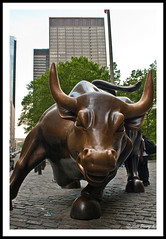
Charging BullAnd the truth is, no.  It’s nowhere near as safe as some would make it out to be.  In fact, it’s down-right risky.  And the less diversification you have, the riskier it becomes.  Hold all your money, or a significant portion of your portfolio, in one stock and you’re just as likely to suffer a tragic loss than you are to retire rich.  Ignore the more conservative professionals who suggest that you should move more and more of your money away from stocks and into something like bonds as you age, and you have a much higher chance of suffering a tragic loss.

Our confidence isn’t entirely misplaced, however. The facts remain that the market does return a healthy rate over time. Alongside traditional investments, exploring alternative investment strategies can also add value to your portfolio. While stocks and bonds play a crucial role, diversifying into different financial instruments ensures a balanced approach to investing, mitigating risks associated with market volatility. As long as you can weather a few down trends, you’re likely to come out on top if you just hold on for the ride. The overconfidence comes when you keep your money in too high of a percentage of stocks as you near retirement age. By the time you are 10-15 years from retirement (about age 50-55) you should have moved at least 50% of your portfolio away from stocks and into bonds. Your investment adviser should be able to help you with that, or you should sign up with a stock advisor service (like the Motley Fool Stock Advisor, or Betterment).  When you’re 5 or so years from retirement, you should be closer to 90% in bonds and other safer investments.  Yes, these investments are less likely to have high returns, but they also are almost guaranteed to return something.  And, as the old saying goes, something is better than nothing.

The bottom line is this.  Be aware of the risk of the stock market and that you should begin playing it safer as you near retirement age and you should be ok.  Don’t get overconfident in the history of the stock market and it’s giant returns.  Most importantly, find an investment adviser that you can trust and, at the very least, get their advice on your portfolio and it’s allocations, and you should find yourself hitting retirement with most of the money you expected to be there.

Image Credit: Charging Bull by kdinuraj, on Flickr

This post originally appeared on Beating Broke on 10/25/2010, and has been refreshed.

Shane Ede

Shane Ede is a business teacher and personal finance blogger.  He holds dual Bachelors degrees in education and computer sciences, as well as a Masters Degree in educational technology.  Shane is passionate about personal finance, literacy and helping others master their money.  When he isn’t enjoying live music, Shane likes spending time with family, barbeque and meteorology.

www.beatingbroke.com

Filed Under: Consumerism, economy, General Finance, Investing, Retirement, ShareMe Tagged With: bonds, bull market, Retirement, return, stock market, stocks

The New Retirement

May 1, 2013 By Shane Ede 7 Comments

I recently had the chance to chat with Todd Tresidder.  If you don’t know the name, don’t worry.  Up until about a year ago, I didn’t either.  But, the short of it is that the guy is retired.  In fact, he retired much earlier than most will.  At the ripe “old” age of 35, he retired.  Which must mean he’s off golfing around in the Arizona heat, right?  Or down, sipping OJ at some southern Florida retirement village?  Not likely.

Todd is retired in the sense that he doesn’t report to a boss.  He does what he wants, when he wants to.  One of the things that he wants to do is write books that help people like you and I become better financially.  He’s got several that he’s written so far, and I’m sure he’s working on more.  During that first meeting, Todd and I spoke for a while on retirement.  Speaking with another financially minded person, I usually expect to hear people talk about 401(k)s, IRAs, and stock purchasing.  I don’t discount those tools, but I just don’t feel that, like Social Security, you should be depending on them for your whole retirement.  Surprisingly, Todd agrees.  The longer we spoke, the more we found that we agreed on.  At the end of our conversations, Todd offered me a copy of his book on retirement. I accepted.

How Much Money do I need to retireLong story short, I finally read it.  It took me a while, but I’m glad I got around to it.

If there’s anything that stands out about the book, is that Todd knows what he’s talking about.  He’s got the experience behind him to talk about the subject in an informed and educational manner, and technically, probably knows more about some of his subject matter than I ever will.  He spends the first several chapters of the book dispelling a few myths about retirement, and about the way in which most people tend to think about it.  He then takes off on a few chapters of some of the math and logic behind the different ways of calculating your retirement needs, and calculating that mythical “number” that everyone seems to be seeking out that will indicate that they’ve saved all that they need to save for retirement.  Not only does that one perfect number not exist, he argues, but the calculations that we make to arrive at it are completely flawed.

The rest of the book is focused on what I like to call the New Retirement.  He goes into detail on the ways to properly estimate your income needs for the future, and then into ways that he believes (and I agree) that a properly diversified retirement “portfolio” should be structured.  I don’t want to spoil too much of the book so I won’t say much more.  What I will say is that the book isn’t terribly long.  It’s not a deeply structured manual on all the different retirement accounts.  And it’s not terribly expensive.  It’s $4.99 on the Kindle (free for Prime members), and about $10 in paperback.

Pick up a copy of How Much Money do I need to Retire at Amazon.  You can check out Todd’s site as well as the other books he’s written at FinancialMentor.com.


Shane Ede

Shane Ede is a business teacher and personal finance blogger.  He holds dual Bachelors degrees in education and computer sciences, as well as a Masters Degree in educational technology.  Shane is passionate about personal finance, literacy and helping others master their money.  When he isn’t enjoying live music, Shane likes spending time with family, barbeque and meteorology.

www.beatingbroke.com

Filed Under: Books, pf books, Retirement Tagged With: new retirement, Retirement, todd tresidder

What is Financial Independence

March 8, 2013 By Shane Ede 37 Comments

In my post “Are we Doing Personal Finance Wrong“, I talked a little bit about “Financial Freedom”.  Of all the comments that the post got, that was the one thing that was mentioned most of all.  Which, to me, means it bears some further discussion.

Financial freedom, or financial independence, can be defined a little bit differently depending on the person doing the defining.  Like most personal finance, it’s highly dependent on the values of the person.  What I define financial independence as might be a whole lot different from what you define it as.  I think, no matter who is defining it, the real keystone is the word freedom or independence.  We all want freedom and independence.  Some autonomy from the rat race.  The idea of having the financial ability to declare our independence is alluring.

What is Financial Independence, for me.

Financial IndependenceMy definition of financial independence is likely pretty similar to most.  In it’s most broad sense, I define it as the ability to not be swayed by financial needs.  Breaking it down a bit more, it means not “needing” a job just to make ends meet.  It means not “needing” a job to keep a roof over my head.  It also means having the ability to take advantage of opportunities to improve my situation.  Whether that means having the cash on hand to be able to buy or start a business, buy a rental property, or just take a month off to travel or learn something new isn’t all that relevant.  It’s that I have that ability.

Something that needs to be said here is that at one point, not that very long ago, I thought of it as being synonymous with “independently wealthy”.  Which may or may not be true depending on your definition of independently wealthy.  For sure, I don’t believe that it matches up with the definition I had back then.  Back then, I would have told you that independently wealthy meant retirement and not doing a dang thing.  Sitting on the beach all day, every day, being utterly non-productive.  That definition has changed.  A lot.  Financial independence, if it’s synonymous with independently wealthy, doesn’t mean that you don’t work, but that you have the financial freedom to do the work you want to do.  Because you are free from the “need” part of the financial equation, you have the ability to do the work that you feel called to do without regard for how much it pays, whether it’s part-time or full-time, or whether it’s a short term project or not.

What is Financial Independence, for you.

As I mentioned above, your definition might differ slightly (or a lot) from mine.  Maybe, for you, it really does mean sitting on a beach somewhere, doing nothing.  Maybe it means not having to work and spending all your time volunteering instead.

However our definitions might differ is somewhat irrelevant.  Our personal definitions still mean that it’s something worth pursuing to each of us.  And, if our end-game is to be financially independent, I still don’t think we’re doing personal finance right.  I still don’t think we’re even close.  I think we need to break away from the systems we have, find the ones that work for our personal finances, and then achieve our financial independence.

Achieving your Financial Independence.

Breaking away from the systems we have for personal finance won’t be easy.  Heck, our definition of financial independence will probably change along the way and require a new system again.  But, achieving that financial independence should be our primary goal.  Not retirement.  Not our childrens’ college education.  And certainly not saving up cash to pay for that big SUV.  Our primary goal in our personal finance should be achieving financial independence.  Once we’ve achieved that, retirement, education, and big trucks will come.  And they’ll come without sacrificing anything.

The Path to Financial Independence.

Much like our definitions differ, so too will our path to financial independence differ.  Undeniably, I think that the first landmark on that path has to be the complete and utter destruction of all debt.  Before we worry about anything else, we have to be free of the yoke of debt.  Joan Otto, the community manager at Man Vs. Debt, wrote about this recently specifically referencing retirement accounts.  Take a minute or two and read it.  Then, pay special attention to the comments.  Aside from a few people, almost all of the comments are people who think she’s off her rocker.

Is she off her rocker?  Or is she just developing a new system for her personal finance that leads towards her financial independence?  It takes a certain amount of courage to admit to the thoughts and ideas that she does in that post.  (I should know, see: Why I’m Withdrawing from an IRA)  But, then try and remove what you’ve been taught about retirement and saving from your mind for a minute and re-read section 4 of her post.  She’s not being irrational.  In fact, I’d argue that she’s being overly rational.  I think I’ll have to write more about that in another post, but the Vulcan, logic loving, part of me thinks she is right.

Our paths to financial independence will vary.  Some of those people in the comments of Joan’s article will achieve it using the current system.  Many of them will have started saving early, and found ways to drastically save.  But, will they have the liquidity available to make a move on an opportunity in the 30’s, 40’s, or even 50’s?  Or will it have to wait until they’re past “retirement” age and have penalty free access to their nest eggs?

Find your path.  Start the journey, and achieve your financial independence.

Have you already started on your journey?  Have you found your path?  Have you achieved your financial independence?  There are many of us here, including myself, that are new to the journey or haven’t even begun yet that could benefit greatly from your story.  Will you share it with us?

img background credit:Fireworks at Swindon by Stephen_Gunby, on Flickr

Shane Ede

Shane Ede is a business teacher and personal finance blogger.  He holds dual Bachelors degrees in education and computer sciences, as well as a Masters Degree in educational technology.  Shane is passionate about personal finance, literacy and helping others master their money.  When he isn’t enjoying live music, Shane likes spending time with family, barbeque and meteorology.

www.beatingbroke.com

Filed Under: Consumerism, Debt Reduction, Frugality, Investing, Personal Finance Education, Retirement, Saving, ShareMe Tagged With: financial freedom, financial independence, retirement accounts

  • « Previous Page
  • 1
  • …
  • 4
  • 5
  • 6
  • 7
  • 8
  • …
  • 11
  • Next Page »
  • Facebook
  • Pinterest
  • RSS
  • Twitter

Improve Your Credit Score

Money Blogs

  • Budget and the Bees
  • Celebrating Financial Freedom
  • Christian PF
  • Clever Dude
  • Dual Income No Kids
  • Everybody Loves Your Money
  • Financial Panther
  • Gajizmo.com
  • Grocery Coupon Guide
  • Lazy Man and Money
  • Make Money Your Way
  • Money Talks News
  • Personal Profitability
  • PF Blogs
  • Reach Financial Independence
  • Saving Advice
  • The Savvy Scot
  • Yes, I am Cheap

Categories

Disclaimer

Please note that Beating Broke has financial relationships with some of the merchants mentioned here. Beating Broke may be compensated if consumers choose to utilize the links located throughout the content on this site and generate sales for the said merchant.

Visit Our Advertisers

Need to change careers? Consider an Accounting Certificate Program from WTI.