Beating Broke

Personal Finance from the Broke Perspective

  • Home
  • About
  • We Recommend
  • Contact
  • Privacy Policy

Powered by Genesis

Avoiding Reactive Personal Finance

March 5, 2010 By Shane Ede 8 Comments

Just what is reactive personal finance?  It’s the management of your personal finance in reaction to events or situations as opposed to the management of personal finance in anticipation of events or situations.

The best example of this is a budget.  A budget is built and held to in anticipation of events in your financial life.  You know that things like your electric bill and water bill are going to be coming and roughly how much they  will be.  That allows you to budget for them and set aside money to pay for them with.  A budget is a great tool in avoiding reactive personal finance.

Why do we need to avoid reactive personal finance?  Because reactive personal finance is disruptive.  You are managing and spending your money in reaction to the events that are happening.  Doing so can cause you to quickly lose control of your finances and find yourself in a downward spiral of poor management choices and, eventually, it can lead to you being broke.

Some examples of events that can cause you to become reactive.  Medical emergencies, blown tires, unexpected social events, and even bills that are larger than they normally are.  Any thing that is unexpected can cause you to spend in a reactive manner.  And when you have events like that, it can often lead to larger problems, like overspending on luxury items to make you feel better.

How do you avoid reactive personal finance?  No plan is foolproof, so it’s not really completely possible.  However, you can make the odds of it happening be cut drastically.  How?  An emergency fund and a bit of willpower.  The emergency fund will give you the available spending power to cover any emergencies that would normally make you spend in a reactive manner.  Instead of trying to react and borrow from somewhere else to pay for the emergency, you can just pay from the emergency fund and not need to react any further.  The willpower comes in where the spending opportunity isn’t an emergency.  You have to have the willpower to avoid last minute and spontaneous spending that could drain your funds and cause you to become reactive when you no longer have the money to pay bills or buy necessities.

The best laid plans often go askew.  But, building an emergency fund and strengthening your resolve can go miles towards avoiding reactive finance and potential disaster.

Shane Ede

Shane Ede is a business teacher and personal finance blogger.  He holds dual Bachelors degrees in education and computer sciences, as well as a Masters Degree in educational technology.  Shane is passionate about personal finance, literacy and helping others master their money.  When he isn’t enjoying live music, Shane likes spending time with family, barbeque and meteorology.
www.beatingbroke.com

Filed Under: budget, Emergency Fund, Financial Mistakes, General Finance, Personal Finance Education, Saving, ShareMe Tagged With: budget, emergency, emergency fund, Finance, Personal Finance, reactive finance, willpower

Frugality and Brand Names

February 19, 2010 By Shane Ede 2 Comments

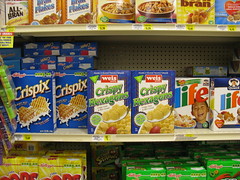
The words Frugal and Frugality have been some very popular words lately.  With the economy the way it is, it’s not very hard to see why. Even so, I still know people who claim to be frugal, but refuse to buy anything but the brand name products.

There is very little room for brand names in a frugal lifestyle.  The good news is that many of the non-brand name products are very similar products.  In some cases, they are the exact same product.  In other cases, they are not even close to the same thing.  In those cases, you have to weigh how much you want that exact product against your desire to save money and live frugally.  Is the extra $1 worth it?  Depending on the product, you might make an exception.

If you decide it is worth it, here are some things you can do to try and help cut that cost.

  • Coupons!  Check the manufacturer’s website.  Many have customer loyalty programs that you can sign up for and get occasional coupons.  Look through the Sunday paper.  Or, see if you can find a coupon train to join up with.  Swap Mamas has one, and I’m sure many other sites do as well.  There are also coupon trading sites that you can make use of.
  • Buy in bulk.  If you’ve just got to have it, buying in bulk can sometimes help cut the cost.  My favorites are Sam’s Club/Costco and Amazon.  If the item is perishable, maybe you can find a friend that will split it with you and you can still reap the frugal benefits.  Sometimes it’s worth the cost of a Costco membership.
  • Cash back rebates.  If you have a credit card that gives cash back, you can use it to help cut the cost of the item.  Just make sure you’re paying off that card every month, or the interest will eliminate any benefit.
  • Supermarket Loyalty programs.  Some supermarkets have a loyalty program.  Spend $XXX and get $X off!  It’s usually not anything spectacular, but every little bit helps.

Sometimes the brand name is worth it.  But, I encourage you to try the generic stuff too.  You just might be surprised to find that it is a very sufficient replacement.

Photo Credit: http://www.flickr.com/photos/thisisbossi/ / CC BY-SA 2.0

Shane Ede

Shane Ede is a business teacher and personal finance blogger.  He holds dual Bachelors degrees in education and computer sciences, as well as a Masters Degree in educational technology.  Shane is passionate about personal finance, literacy and helping others master their money.  When he isn’t enjoying live music, Shane likes spending time with family, barbeque and meteorology.

www.beatingbroke.com

Filed Under: Frugality, Saving, ShareMe Tagged With: brand, brand name, coupons, frugal, Frugality, generic, rebates

Coupon Angel

February 17, 2010 By Shane Ede 1 Comment

I’d never heard the term before, but JD at A Penny Saved used it today.  Coupon Angel is a term that he uses (and maybe more people do as well?) to refer to people who leave an unused coupon for a product sitting on the shelf or near the product at the store.  If you, like JD, happen upon one you get a usable coupon for an item.  Kinda cool.

I’ve seen it happen but never had a term for it before.  Now I do.

Shane Ede

Shane Ede is a business teacher and personal finance blogger.  He holds dual Bachelors degrees in education and computer sciences, as well as a Masters Degree in educational technology.  Shane is passionate about personal finance, literacy and helping others master their money.  When he isn’t enjoying live music, Shane likes spending time with family, barbeque and meteorology.

www.beatingbroke.com

Filed Under: Coupons and Discounts, ShareMe Tagged With: coupon angel, coupons

  • « Previous Page
  • 1
  • …
  • 95
  • 96
  • 97
  • 98
  • 99
  • …
  • 111
  • Next Page »
  • Facebook
  • Pinterest
  • RSS
  • Twitter

Improve Your Credit Score

Money Blogs

  • Celebrating Financial Freedom
  • Christian PF
  • Dual Income No Kids
  • Financial Panther
  • Gajizmo.com
  • Lazy Man and Money
  • Make Money Your Way
  • Money Talks News
  • My Personal Finance Journey
  • Personal Profitability
  • PF Blogs
  • Reach Financial Independence
  • So Over Debt
  • The Savvy Scot
  • Yes, I am Cheap

Categories

Disclaimer

Please note that Beating Broke has financial relationships with some of the merchants mentioned here. Beating Broke may be compensated if consumers choose to utilize the links located throughout the content on this site and generate sales for the said merchant.

Visit Our Advertisers

Need to change careers? Consider an Accounting Certificate Program from WTI.