Beating Broke

Personal Finance from the Broke Perspective

  • Home
  • About
  • We Recommend
  • Contact
  • Privacy Policy

Powered by Genesis

Dollar Cost Averaging; Not Just For Stocks

October 31, 2012 By Shane Ede 13 Comments

Most of the time, when you hear or read the phrase “Dollar Cost Averaging”, it’s being applied to the stock market.  It’s the practice of buying a set amount of stock at a regular interval whereby the average cost per share of stock ends up normalizing.  So, if you buy stock high one time, and low the next, and then high, your average cost is going to be lower than the high cost and more than the low cost.  So long as the stock doesn’t pull an Enron, and slowly increases in value, you come out ahead in the long term.

But, does it have to apply to just stocks?  Absolutely not.  It really can apply to anything that you buy on a regular basis.  Gas for example.  A couple of weeks ago, I filled up the car at about $3.89 a gallon.  Today, as I drove by the gas station, it was at $3.69 a gallon.  I filled up at $3.89, so I don’t really need any gas right now, but I seriously considered stopping and topping off the tank to bring the overall cost of the gas I bought over the last several weeks down a few pennies.

There might be some argument that dollar cost averaging doesn’t work very well for consumables.  After all, if I had bought a few gallons at $3.69, my overall reserves of gas would not increase.  I’ve already consumed those few gallons that I paid $3.89 a gallon for.  But, I would have increased the total amount I had bought, and the average price would have been less than $3.89.

Dollar cost averaging works especially well for things that regularly fluctuate in price.  If you’re building a stockpile of food in your basement, it’s chili bean season.  There’s sales all over the place for chili beans.  Now, you could buy 50 or so cans at the sale price, but you might be tight on storage space.  Or, they might expire before you get to use them all.  Instead, you can use dollar cost averaging to buy slightly more than you might normally buy, and bring down the average cost of the ones you have to buy later in the season when they aren’t on sale any more.

O.K.  This does seem a little silly.  After all, who’s going to go out and figure out the average cost of a can of chili beans in the basement?  But, there’s a point in there.  There’s a certain rationality in buying things in set increments over time rather than trying to time the market (or chili bean sale) and buying a whole lot of the item at once.  How many times have you bought something only to find that it was on sale the next week?

And, don’t forget that the same principle goes the other way.  There are many normal things that we do on an everyday basis that can apply to the stock market too!  When we shop, we tend to stick to the brand names we know.  Even if those brand names are generic names.  Go far enough out of town and stop at a grocery store and try and convince yourself that the generic brand at that store is the same as the generic at home.  It takes a bit of thought!  Sticking to companies (brands) that you know when investing can be beneficial too.  More often than not, those brands and companies are companies that have been around for a long time and built a certain amount of trust in the marketplace.  They’re unlikely to just be an overnight sensation, or to quickly fall from favor.  In short, they’re stalwart investing options.

What other everyday habits do we all have that can be carried over to the stock market?  And what other stock market habits do we have that can carry over to everyday life?

img credit:Nick Harris1, on Flickr

Shane Ede

Shane Ede is a business teacher and personal finance blogger.  He holds dual Bachelors degrees in education and computer sciences, as well as a Masters Degree in educational technology.  Shane is passionate about personal finance, literacy and helping others master their money.  When he isn’t enjoying live music, Shane likes spending time with family, barbeque and meteorology.

www.beatingbroke.com

Filed Under: Financial Miscellaneous, Frugality, Investing, Saving, ShareMe Tagged With: dollar-cost averaging, Frugality, Investing, Saving

Personal Finance Reassessment

October 16, 2012 By Shane Ede 6 Comments

Occasionally, there comes a time when you have to take a look at your personal finances and do a little personal finance reassessment.  While the need may arise to do a complete overhaul once in a while, a simple reassessment can usually suffice.  All it takes is a little attention, and some dedicated time to making sure that your finances are in order.

Recently, my wife and I were, more or less, forced to do a little personal finance reassessment.  That’s such a nice, delicate way of saying it isn’t it?  Truth be told, our finances were (are) in a mess. The ripples from when I quit my job last November are still plenty big, and the new job that I have seems to have come just in time to keep us from completely going under.  Combine the drastic decrease in income that event brought about with a couple of people who remained stubborn in their budget, and it was a recipe for disaster.

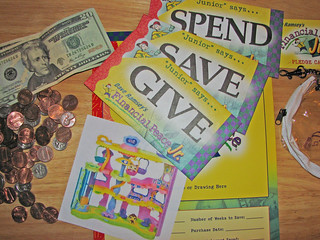
financial peace jrLuckily, we’re usually pretty good at talking about money with each other.  Don’t get me wrong.  There’s plenty of room for improvement.  But, we’re good about not getting into any heated arguments with each other, and being able to figure out where we’ve gone wrong and correcting it.

So, we sat down and caught up our dreadfully behind budget.  And, let me stop here to say something.  What kind of idiot doesn’t keep doing the budget when he quits his job and is making a fraction of what he used to?  This guy.  Dumb.  So, yeah, we caught up the budget.  About 6 months worth of financial data entry.  Some by hand because our bank doesn’t keep history online over 90 days.  So, one by one, directly from the statements I printed off.  Did I mention how dumb that was?

In case you’re curious, catching up on about 6 months of budgeting takes about 6 hours.  6 HOURS!  It’s done though.

One of the things that we discovered, after having done all of that, is that the reason that we were in the pickle that we were in wasn’t because of the loss of income, although that played a part, but more because of how badly we had slipped in the last few months with our spending.  July and August in particular were well above what June was.  In our defense, those are usually higher spend months because they’re usually the only real summer months we get up here in North Dakota, but it was still way off.  And it cost us.  The last several weeks have been pretty hairy, financially.

The scary part of all of that is that we haven’t had a bad financial situation like that for over 5 years.  And, maybe, in that 5 years, we’ve become a little bit lax in our budgeting, and in our finances in general.  No more.  We’re taking the control back, and keeping our finances in order.  Not doing so could mean disaster.  It surely means stress, and that’s something we just don’t need.

During our little reassessment, there were several things that we picked up on.  Like the fact that we didn’t have any life insurance on me.  In my previous job, my employer kept a policy on me that would have been more than sufficient.  For some reason, they decided to cancel that policy when I quit.  😉  So, we’re now budgeting for life insurance policies. Or, the fact that our spending on eating out and groceries had gone way up.  A simple attitude adjustment helps with the eating out, and we’re going to start trying to use menu plans to keep our grocery bill down and to spread it out over the month. Another thing that seems to be part of the issue is the timing of some of our bills.  Before, I made enough that it wasn’t an issue when the bills came due, we always had at least enough to make it to the next payday.  Now, with my lower salary, it’s getting a bit tight right before the 15th (when my wife gets paid), and a few of the bills that come in right before the 15th are adding a little extra stress.  I need to call a few of them and try to get them moved to a slightly later due date.

In the end, our personal finance reassessment came just in time.  We kept a close enough watch on our finances to see the need arising, and were able to meet the need and keep things from getting any worse.  Chalk it up to a lesson learned.  The (almost) hard way.

When was the last time you had a personal finance reassessment?

img credit: Matt Mcgee, on Flickr

Shane Ede

Shane Ede is a business teacher and personal finance blogger.  He holds dual Bachelors degrees in education and computer sciences, as well as a Masters Degree in educational technology.  Shane is passionate about personal finance, literacy and helping others master their money.  When he isn’t enjoying live music, Shane likes spending time with family, barbeque and meteorology.

www.beatingbroke.com

Filed Under: budget, Financial Mistakes, Insurance, Married Money, Personal Finance Education, Saving, ShareMe Tagged With: budget, budgeting, personal finance reassessment, Saving, spending

Saving On Eyeglasses

August 17, 2012 By Shane Ede 2 Comments

If you’re one of the people who needs them, eyeglasses can be one of the most expensive medically necessary things you will have.  Unless you need some other fancy piece of equipment, your eyeglasses can cost several hundred dollars up to a thousand dollars or more if you decide to go with the name brand fashion designer frames.  (If you’re reading this blog, I fully expect you wouldn’t, but we all know there are those that do!)  Before I go much further, I must admit to not being one of those people who needs eyeglasses. (yet.)  I have, so far, been blessed with good vision and very few problems as far as my eyes go.  My wife, on the other hand, is not so lucky.  And, if either of the kids takes after her in the vision department, we’ll be looking at some not-so-fun expenses in the future.

Some people will go to the optometrist, get their prescription, and then order their lenses right on the spot.  And, most of those people will spend a whole lot more for their lenses and frames than they really should.  Depending on how often your prescription, and thus your lenses, changes, you might be buying new lenses and frames on a pretty regular basis.  Add it all up, and the expense can be enough to make you actually consider cutting off the bottoms of coke bottles and super-gluing them to some bent coat hanger wire.  Attractive image, no?

What should you do to save some money on your eyeglasses?

Eyeglasses on TableStart by shopping around.  Just because your optometrist is your eye doctor doesn’t mean you need to purchase all of your eye related devices there.  The doctor already has gotten paid for the visit.  No other compensation for their time and the visit are necessary.  Most towns will have at least two optometrists, and bigger cities will likely have 10-20 or more.  Bigger cities may also have at least one of the new discount eyeglasses stores that have been popping up recently.  Take your prescription home, then call a few of them and ask about prices for the eyeglasses you need.

Take your business online.  If you know what style of frames you want, there are several places where you can purchase prescription glasses online.  Places like Glasses.com (run by the same company that runs 1-800-Contacts), can offer discount prices on eyeglasses because they don’t have as much overhead as many physical retail stores have with employees.  Also, because they aren’t in a physical location, they can tap into the wider customer base of the internet and get bulk discounts on the glasses that they pass along to the customers.

One last place to look that many people forget about are warehouse and membership stores.  Places like Costco and Sam’s Club usually will offer discounted glasses to their members.  Even some Walmart supercenters have vision centers in the building and can offer a better price on glasses because of their size and purchasing power.

Eyeglasses are an important, and often necessary, thing that many people will use over their lifetime.  As your prescriptions and tastes change, you’ll want or need to pick up new pairs of glasses.  Shopping around, both locally at other optometrists and at warehouse stores, and online has the potential to save you hundreds of dollars on your next pair of glasses, and thousands over your lifetime.

Use the money you saved to help pay off a credit card or some other debt!

What other tricks, tips, and hints to you have for saving on eyeglasses?

img credit: NCBrian, on Flickr

Shane Ede

Shane Ede is a business teacher and personal finance blogger.  He holds dual Bachelors degrees in education and computer sciences, as well as a Masters Degree in educational technology.  Shane is passionate about personal finance, literacy and helping others master their money.  When he isn’t enjoying live music, Shane likes spending time with family, barbeque and meteorology.

www.beatingbroke.com

Filed Under: Consumerism, Frugality, Saving Tagged With: eyeglasses, frugal, frugal eyeglasses, glasses, optometrist, Saving

  • « Previous Page
  • 1
  • …
  • 8
  • 9
  • 10
  • 11
  • 12
  • …
  • 24
  • Next Page »
  • Facebook
  • Pinterest
  • RSS
  • Twitter

Improve Your Credit Score

Money Blogs

  • Celebrating Financial Freedom
  • Christian PF
  • Dual Income No Kids
  • Financial Panther
  • Gajizmo.com
  • Lazy Man and Money
  • Make Money Your Way
  • Money Talks News
  • My Personal Finance Journey
  • Personal Profitability
  • PF Blogs
  • Reach Financial Independence
  • So Over Debt
  • The Savvy Scot
  • Yes, I am Cheap

Categories

Disclaimer

Please note that Beating Broke has financial relationships with some of the merchants mentioned here. Beating Broke may be compensated if consumers choose to utilize the links located throughout the content on this site and generate sales for the said merchant.

Visit Our Advertisers

Need to change careers? Consider an Accounting Certificate Program from WTI.