Beating Broke

Personal Finance from the Broke Perspective

  • Home
  • About
  • We Recommend
  • Contact
  • Our Editorial Commitment

Powered by Genesis

Personal Finance Reassessment

October 16, 2012 By Shane Ede 6 Comments

Occasionally, there comes a time when you have to take a look at your personal finances and do a little personal finance reassessment.  While the need may arise to do a complete overhaul once in a while, a simple reassessment can usually suffice.  All it takes is a little attention, and some dedicated time to making sure that your finances are in order.

Recently, my wife and I were, more or less, forced to do a little personal finance reassessment.  That’s such a nice, delicate way of saying it isn’t it?  Truth be told, our finances were (are) in a mess. The ripples from when I quit my job last November are still plenty big, and the new job that I have seems to have come just in time to keep us from completely going under.  Combine the drastic decrease in income that event brought about with a couple of people who remained stubborn in their budget, and it was a recipe for disaster.

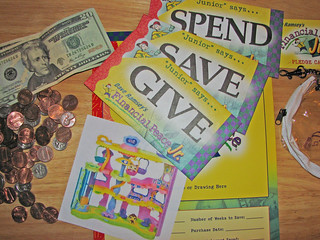
financial peace jrLuckily, we’re usually pretty good at talking about money with each other.  Don’t get me wrong.  There’s plenty of room for improvement.  But, we’re good about not getting into any heated arguments with each other, and being able to figure out where we’ve gone wrong and correcting it.

So, we sat down and caught up our dreadfully behind budget.  And, let me stop here to say something.  What kind of idiot doesn’t keep doing the budget when he quits his job and is making a fraction of what he used to?  This guy.  Dumb.  So, yeah, we caught up the budget.  About 6 months worth of financial data entry.  Some by hand because our bank doesn’t keep history online over 90 days.  So, one by one, directly from the statements I printed off.  Did I mention how dumb that was?

In case you’re curious, catching up on about 6 months of budgeting takes about 6 hours.  6 HOURS!  It’s done though.

One of the things that we discovered, after having done all of that, is that the reason that we were in the pickle that we were in wasn’t because of the loss of income, although that played a part, but more because of how badly we had slipped in the last few months with our spending.  July and August in particular were well above what June was.  In our defense, those are usually higher spend months because they’re usually the only real summer months we get up here in North Dakota, but it was still way off.  And it cost us.  The last several weeks have been pretty hairy, financially.

The scary part of all of that is that we haven’t had a bad financial situation like that for over 5 years.  And, maybe, in that 5 years, we’ve become a little bit lax in our budgeting, and in our finances in general.  No more.  We’re taking the control back, and keeping our finances in order.  Not doing so could mean disaster.  It surely means stress, and that’s something we just don’t need.

During our little reassessment, there were several things that we picked up on.  Like the fact that we didn’t have any life insurance on me.  In my previous job, my employer kept a policy on me that would have been more than sufficient.  For some reason, they decided to cancel that policy when I quit.  😉  So, we’re now budgeting for life insurance policies. Or, the fact that our spending on eating out and groceries had gone way up.  A simple attitude adjustment helps with the eating out, and we’re going to start trying to use menu plans to keep our grocery bill down and to spread it out over the month. Another thing that seems to be part of the issue is the timing of some of our bills.  Before, I made enough that it wasn’t an issue when the bills came due, we always had at least enough to make it to the next payday.  Now, with my lower salary, it’s getting a bit tight right before the 15th (when my wife gets paid), and a few of the bills that come in right before the 15th are adding a little extra stress.  I need to call a few of them and try to get them moved to a slightly later due date.

In the end, our personal finance reassessment came just in time.  We kept a close enough watch on our finances to see the need arising, and were able to meet the need and keep things from getting any worse.  Chalk it up to a lesson learned.  The (almost) hard way.

When was the last time you had a personal finance reassessment?

img credit: Matt Mcgee, on Flickr

Shane Ede

Shane Ede is a business teacher and personal finance blogger.  He holds dual Bachelors degrees in education and computer sciences, as well as a Masters Degree in educational technology.  Shane is passionate about personal finance, literacy and helping others master their money.  When he isn’t enjoying live music, Shane likes spending time with family, barbeque and meteorology.

www.beatingbroke.com

Filed Under: budget, Financial Mistakes, Insurance, Married Money, Personal Finance Education, Saving, ShareMe Tagged With: budget, budgeting, personal finance reassessment, Saving, spending

Killing Debt? Have a Realistic Budget

September 24, 2012 By MelissaB 9 Comments

Do you have debt?  Does it drive you crazy?  Do you stay awake at night wondering how to pay it all off?  Does it feel like you will never pay it off?  Do you argue with your spouse about your bills?

While debt can at times be a useful tool (student loans, for example), when it comes time to pay it back, debt can be a heavy burden no matter if it is good debt or bad debt.  Debt can cause marriage problems and even affect your health.

If you have decided enough is enough, and you want to be free of debt once and for all, you might be tempted to slash your spending and put all of your extra money on your debt.  Be careful, though, because this type of plan can lead to a quick crash and burn much like a person on a crash diet will only follow the plan for a few weeks before giving up.

Before you even begin to put extra money on your debt, you must first create a realistic budget.

What Is a Realistic Budget?

A realistic budget is one in which ALL of your expenses are taken into account.  Perhaps you pay your car insurance every 6 months, and it is $400.  If you want to create a barebones budget so you can pay off debt, perhaps you don’t consider this payment, which can be a mistake.  When the car insurance payment is due, where is the money to pay it?

We have been paying down our debt aggressively, and we made the mistake of not having a realistic budget.  We did have a $1,000 emergency fund, but because so much of our extra money was going toward debt repayment, we continually hit months where we had expenses such as the semi-annual car insurance payment and no cash to pay for it.  We would rob the emergency fund to pay it, and then we would have to stop our extra debt repayment for awhile to build up the emergency fund.  This cycle creates its own stress.

A Realistic Budget May Mean Hard Sacrifices

When you add up all of the payments you have to make in a year that don’t come in regular monthly intervals, you may be surprised.  There is car insurance, house insurance, license plate tabs, vet bills if you have animals, car repairs and maintenance, children’s athletics, and clothing for the family to name a few.  Add up how much you spend on these, and you probably easily have a total in the thousands.

That is thousands of dollars that are unaccounted for in your budget.

Almost a year into our debt repayment, we finally made a realistic budget.  We were shocked to see that when we set aside money each month for a portion of our annual or semi-annual payments (like $67 for our semi-annual car insurance payment), we didn’t have enough income to cover our realistic expenses.  As a result, we had to make some hard sacrifices such as cutting cable completely and pulling our daughter out of her expensive preschool.  These sacrifices weren’t easy, but making them did relieve some stress.  Now we no longer have ups and downs in our money flow.  We set the money aside, and when the bill is due, the money is there to pay it.

We may not be able to put as much on our debt every month, but we have a set amount for repayment above the minimum payment, and any extra money that comes in also gets put on debt.

Creating a realistic budget can help you avoid the stress of not having enough money certain months to pay all of your bills when semi-annual and annual payments are due.  However, you will feel more in control of your money, which can create a positive cycle.  The more in control of your money you are, usually the more money you find to pay on your debt.

What irregular expenses give you financial difficulties?

MelissaB
MelissaB

Melissa is a writer and virtual assistant. She earned her Master’s from Southern Illinois University, and her Bachelor’s in English from the University of Michigan. When she’s not working, you can find her homeschooling her kids, reading a good book, or cooking. She resides in New York, where she loves the natural beauty of the area.
www.momsplans.com/

Filed Under: budget, Debt Reduction, ShareMe Tagged With: budget, budgeting, debt, Debt Reduction

Debt Ceiling Crisis?

July 25, 2011 By Shane Ede 13 Comments

If you’re even slightly interested in the US economy, and, let’s face it, most of the world is, then you’ve likely been at least marginally following the last few weeks worth of debt ceiling news.  The quick and dirty of it is that the US government has a debt ceiling that puts a cap on how much debt the US federal government can carry.  If they reach that cap, they can no longer issue treasury bonds and the like to raise money to pay for things.  Based on what I’ve read, everyone would like us to believe that it’s a major crisis, and the world will end if we don’t raise that debt ceiling and allow for more debt.  But, is it really a crisis?

Let’s think about this just a little bit.  Replace “U.S. Government” with John Doe in everything I’ve just said, and all the news you’ve read.  If we were talking about an individual, we wouldn’t be talking about how the world would end if they weren’t allowed to accumulate more debt.  We’d be talking about how they need to radically cut costs, increase income, pay off debt until they can get their finances in order.  Would  it be called a crisis?  Maybe on a personal level, John Doe would believe it was a crisis.  But, it certainly wouldn’t be world ending.

Bus1I’ll admit that it is a bit different when it’s a government entity that we’re talking about.  If the US government goes bankrupt, there will be some pretty serious problems with the economy for a while.  Which brings up another issue altogether.  The US economy needs some diversification of it’s revenue streams.  Way too much of the economy balances on how much money the US government sinks into it each month.

It’s time we start asking the same questions of the US government that we would be asking of John Doe.  Do you really need that expenditure?  That service?  All three cars?  The McMansion?  Unfortunately, those that are in charge in Washington are playing political ball instead of really trying to solve the problem.  They think way to hard about what programs they can cut that won’t lose them votes in the next cycle, or how much they can raise taxes without losing votes, when, instead, they should be looking to make the US government financially solvent and stabilizing it’s fiscal situation.  You or I would start with a balanced budget, I don’t see any reason why the government shouldn’t do the same.

What do you think?  I don’t think I’m being to idealistic in asking that they carry a balanced budget each year.  Or that they cut costs until they can do that.  Yes, they’ll likely have to raise taxes some to pay off what they’ve got for debt, but if it doesn’t come with some pretty significant cost cutting, they’ll all be looking for new jobs in 2012 anyways.

photo credit: Public Notice Media

Shane Ede

Shane Ede is a business teacher and personal finance blogger.  He holds dual Bachelors degrees in education and computer sciences, as well as a Masters Degree in educational technology.  Shane is passionate about personal finance, literacy and helping others master their money.  When he isn’t enjoying live music, Shane likes spending time with family, barbeque and meteorology.

www.beatingbroke.com

Filed Under: budget, economy, Taxes Tagged With: budget, budgeting, debt ceiling, federal budget, government, Taxes, us government

  • « Previous Page
  • 1
  • …
  • 6
  • 7
  • 8
  • 9
  • Next Page »
  • Facebook
  • Pinterest
  • RSS
  • Twitter

Improve Your Credit Score

Money Blogs

  • Budget and the Bees
  • Celebrating Financial Freedom
  • Christian PF
  • Clever Dude
  • Dual Income No Kids
  • Everybody Loves Your Money
  • Financial Panther
  • Gajizmo.com
  • Grocery Coupon Guide
  • Lazy Man and Money
  • Make Money Your Way
  • Money Talks News
  • Personal Profitability
  • PF Blogs
  • Reach Financial Independence
  • Saving Advice
  • The Savvy Scot
  • Yes, I am Cheap

Categories

Disclaimer

Please note that Beating Broke has financial relationships with some of the merchants mentioned here. Beating Broke may be compensated if consumers choose to utilize the links located throughout the content on this site and generate sales for the said merchant.

Visit Our Advertisers

Need to change careers? Consider an Accounting Certificate Program from WTI.